Underground utility strikes continue to be a significant risk across construction, utilities, highways and civil engineering projects.
But when a utility is damaged, the investigation often tells us something that is just as important as the incident itself: how was the cable avoidance equipment actually being used?
A common theme when downloading CAT usage data as part of utility damage investigations is that the Genny hasn’t been used.
The CAT has been used.
The operative has been trained.
The CAT and Genny are available on site.
But the Genny stays in the case.
Why does this matter?
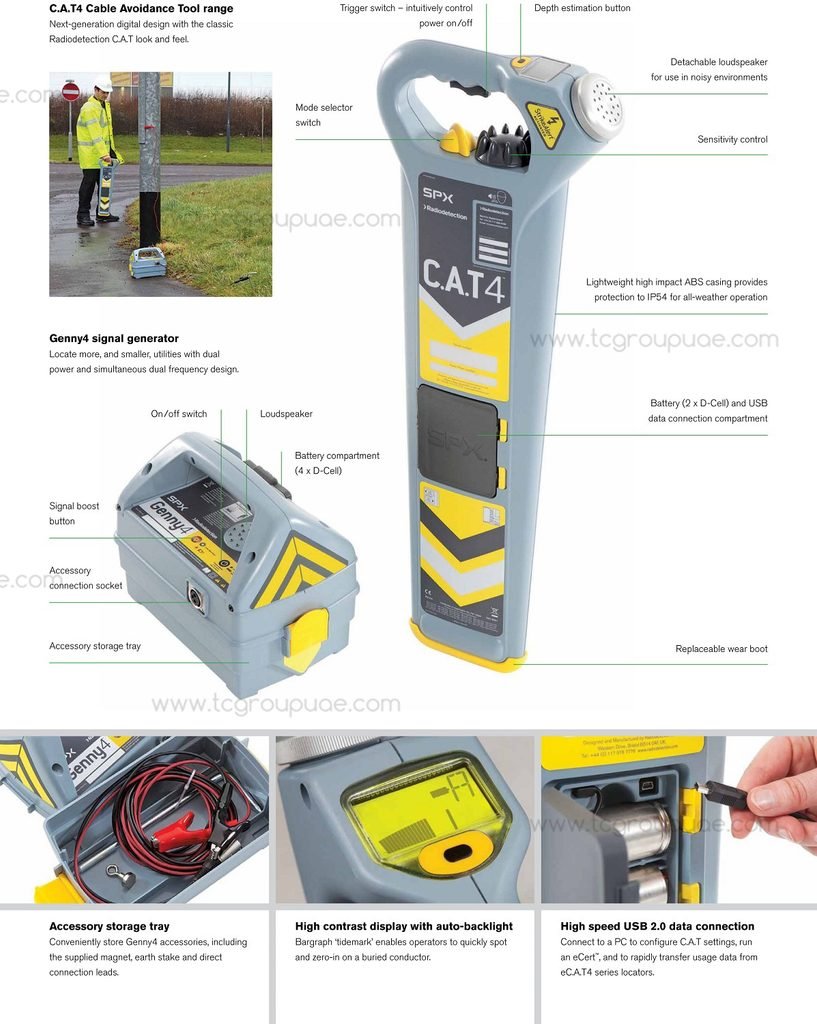
A CAT (Cable Avoidance Tool) detects electromagnetic signals from buried services. However, not every underground service will necessarily produce a detectable signal.
This is where the Genny becomes important.
The Genny is a signal generator. When used correctly with the CAT, it applies a signal to a suitable service, allowing the CAT to detect and trace it more effectively.
That means using the CAT alone can potentially leave gaps in the detection process.
The CAT and Genny are designed to be used together.
The issue, therefore, isn’t simply whether an operative has a CAT & Genny certificate or whether the equipment was available on site.
The real question is:
Was it actually used correctly?
Training doesn’t always equal competency
It is easy to look at a training matrix following a utility strike and conclude:
“The operative was CAT & Genny trained.”
But a training certificate only tells us that someone has completed training.
It doesn’t tell us what happened on site.
Were they using the Genny?
Were they using the correct detection modes?
Were they scanning correctly?
Were they rescanning as the excavation progressed?
Were they following the permit-to-dig and safe-digging process?
This is where downloadable CAT data can provide a much better picture of what is actually happening in the field.
Why aren’t people using the Genny?
This is perhaps the biggest question.
Is it because people don’t understand its importance?
Is it because they aren’t confident using it?
Is it because using the Genny is seen as an additional step that takes more time?
Is it simply habit?
Or have we created a culture where getting through the training course is considered the same as demonstrating competency?
There may be different answers depending on the individual, the type of work and the organisation.
But if the same pattern keeps appearing in investigations, it is something that needs to be addressed.
Moving from training records to actual behaviour
Technology now gives organisations an opportunity to look beyond training records.
Modern data-logging CATs can provide information about how equipment has been used, including operating modes and, depending on the equipment, location and other usage information.
This creates an opportunity for supervisors and SHEQ teams to identify trends and ask better questions.
Instead of simply asking:
“Is the operative trained?”
we can ask:
“How is the equipment actually being used?”
That shift is important.
If an operator’s CAT data consistently shows limited use of the Genny, that doesn’t automatically mean they have done something wrong. It does, however, provide an opportunity to investigate further.
It could identify a need for:
- Refresher training
- Increased supervision
- A review of working practices
- Further competency assessment
- Better understanding of the cable avoidance process
The bigger picture
The Genny is not a magic solution to underground utility strikes.
CAT & Genny equipment must be used as part of a wider safe-digging process, including accurate utility information, appropriate surveying, permit-to-dig arrangements, safe excavation techniques and continuous verification as work progresses.
But the equipment is only effective if people use it correctly.
That is why the question shouldn’t simply be:
“Do we have CAT & Gennys on site?”
It should be:
“Are our people actually using them correctly?”
If we are serious about reducing underground utility strikes, we need to understand what is happening in the field — not just what our training records tell us.
The data is there. We should be using it.